Health & Safety Policy — House Clearance Ware
Purpose: This policy sets out the commitment of our house clearance and rubbish removal operation to protect the health, safety and welfare of employees, contractors, clients and the public. We aim to provide a safe service for all clearance jobs, from small domestic clear-outs to larger waste clearance projects. The policy applies to all activities across our service area and to all staff engaged in waste handling, rubbish collection and clearance services.Scope: The policy covers every stage of a clearance task: site assessment, manual handling, segregation of waste, removal of bulky items, transport and transfer to appropriate disposal or recycling facilities. It includes work carried out in occupied and vacant properties, communal areas, gardens and outbuildings. Staff must follow operational procedures and use provided equipment and protective clothing to reduce risk.
 Responsibilities: The organisation’s management accepts ultimate responsibility for health and safety and will ensure resources are available for risk control. Supervisors and team leaders must brief teams and enforce safe working methods. Employees are required to take reasonable care of their own safety and that of others, to report hazards and incidents, and to use safety equipment provided. For specialist tasks, accredited contractors will be engaged and supervised to meet our standards for rubbish clearance and waste removal.
Risk Assessment and Control
All clearance jobs must begin with a site-specific risk assessment. Hazards commonly found in house clearances include sharp objects, broken glass, hazardous substances, asbestos-containing materials where suspected, pests and structural instability. Control measures include elimination or substitution where possible, engineering controls (barriers, mechanical aids), safe systems of work and personal protective equipment (PPE).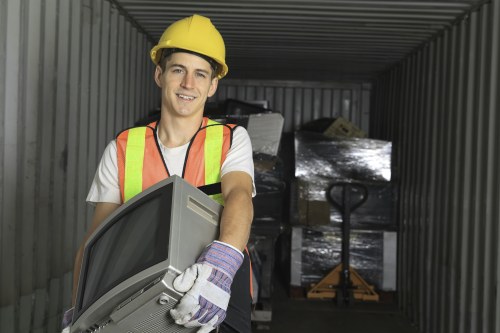 Key controls and safe working practices include:
- Manual handling: use mechanical aids and team lifts; plan lifts and keep loads within safe limits.
- PPE: gloves, steel-toe boots, eye protection, high-visibility clothing and appropriate respiratory protection when required.
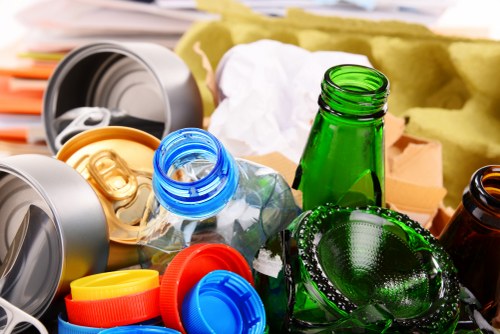
- Segregation: separate recyclable items, general rubbish and hazardous waste; label and store hazardous items securely.
- Vehicle safety: secure loads, conduct pre-shift vehicle checks and ensure drivers follow safe driving standards during rubbish transport.
Training, Competence and Communication
 Training is essential for safe house clearance work. All staff will receive induction training, regular refresher sessions and task-specific instruction. Training covers hazard recognition, safe lifting techniques, PPE use, waste segregation and emergency procedures. Competence will be assessed and documented. Communication between teams and with site contacts must be clear and documented where necessary.
Incident reporting and investigation: All accidents, near-misses and unsafe conditions must be reported immediately. A formal incident record will be completed and reviewed to identify root causes and preventive actions. Learning from incidents is integral to continuous improvement of clearance services and to prevent injury to staff or the public during rubbish removal operations.
Contractors and visitors: Contractors engaged for specialist removal or disposal of hazardous items must demonstrate appropriate competence and insurance. Visitors and clients on site must be briefed about hazards and kept clear of working zones. Supervisors must ensure contractor activities are coordinated with our teams to avoid conflicting operations and additional risks.
 Emergency procedures and first aid: Emergency arrangements will be established and reviewed. First aid provisions will be available at operational bases and on vehicles where practicable. Staff will be trained to summon emergency services, contain risks safely and provide basic first aid. Fire safety arrangements and evacuation procedures are included in pre-job briefings for every clearance job.
Hazardous materials and waste: Where hazardous materials are suspected (chemicals, asbestos, biological waste), work will stop until a competent assessment is made. Such items will be handled only by trained personnel or qualified contractors and disposed of through licensed routes. Records of hazardous waste consignments will be maintained in accordance with safe waste handling practices.
Monitoring, review and continuous improvement: Management will monitor compliance through regular site inspections, toolbox talks and audits of clearance operations. Performance indicators such as incident rates, near-miss reports and audit findings will be reviewed and used to update procedures and training. This Health & Safety Policy will be reviewed annually or after significant incidents or changes to operations affecting rubbish clearance and waste services.
Conclusion: This policy confirms our ongoing commitment to safe house clearances and rubbish removal. Safety is a core value and responsibility is shared by every member of the team. By following the procedures set out here — from risk assessment to incident reporting and contractor management — we maintain a safe, efficient and compliant clearance service.
Approval and implementation: Senior management endorses this policy and requires supervisors to ensure it is implemented in all clearance operations. All staff must familiarise themselves with the content, follow the measures described and participate in training and reviews to uphold the standards expected across our waste clearance activities.
